Did you know that there is a World Wetlands Day? It is on Feb 2nd, 2026 and this year’s theme highlights Wetlands and traditional knowledge: Celebrating cultural heritage.
Although not indigenous peoples, our shrimpers, crabbers, oystermen, and fishermen can be collected to form our ‘cultural heritage’. We will interview a few of these tradespeople and share what they have to say about wetlands.
Caddo Lake’s wetlands were the only ones in Texas to be deemed a Wetland of International Importance (at the International Ramsar Convention of 1971), and its wetlands are very different from ours on the Gulf Coast.
In our weekly series, we will show you why we love our local wetlands. Join us to explore our wetlands each Wednesday leading up to World Wetlands Day!
Galveston Island’s residents notice subtle changes to our coast as colder weather moves in: less tourists, less risk of hurricanes and good fishing are some of the things we look forward to. Have you seen the White Pelicans congregating near Pier 19 and the Ferry Landing? They migrate here every year when their breeding grounds near the Great Lakes freeze over to enjoy our mild winters and abundant waters. In this picture you can see one enjoying the bounty of the Flounder run, once he can figure out how to swallow it!.
Our wetlands serve vital ecological functions, and they are getting increased visits from another migratory species, the Black Mangrove, (Avicennia germinans), a species that historically struggled to survive here because of our periodic winter cold snaps. These freezes were often intense enough to kill off young mangroves before they ever had the chance to establish. Now with warming temperatures, AKA tropicalization, these resilient shrubs are beginning to establish themselves.
Black Mangrove (Avicennia germinans)Smooth Cord-Grass (Spartina alterniflora)
Sandhill Cranes are another migratory species, a true Snow Bird that prefers open marsh and may avoid mangrove-dominated areas. Some worry that mangroves could outcompete native saltmarsh plants like Spartina alterniflora and alter important wetland habitats. Others argue that a mix of mangroves and saltmarsh plants creates a stronger, more diverse coastal ecosystem.
Ecological Restoration practices are designed to improve the balance between native and nonnative species, oftentime removing invasive species, but what happens on our shifting sandbar of an island when you remove a plant that does a great job stabilizing the shoreline?
We interviewed one of the leading research scientists on this topic, Dr. Anna Armitage, and this is what she had to say, “Our lab studies how mangrove and marsh plants are similar and different … Research from our lab has shown that a diverse mix of marsh and mangrove plant species provides the most benefits for local communities and economies.”
Dr. Anna Armitage in the field with Black Mangroves.
So what do you think? Are black mangroves a welcome addition, or do they pose challenges for local species and marsh communities?
Today’s the day to dress up, have fun, and embrace all things spooky, but did you know the ocean has its own creepy (and cool) cast of characters lurking below the surface.
From the Vampire Squid and Ghost Octopus to the eerie Goblin Shark and the Immortal Jellyfish, these sea dwellers live their entire lives in spooky costumes! Dive in to meet some of the ocean’s most ghoulishly fascinating creatures…if you dare!
Vampire Squid – Named for its dark red, “blood-like” color, but don’t worry… it’s not after your blood!
Cuttlefish – Masters of disguise! Their chromatophores (color-changing cells) help them camouflage, communicate, defend, and even hypnotize prey.
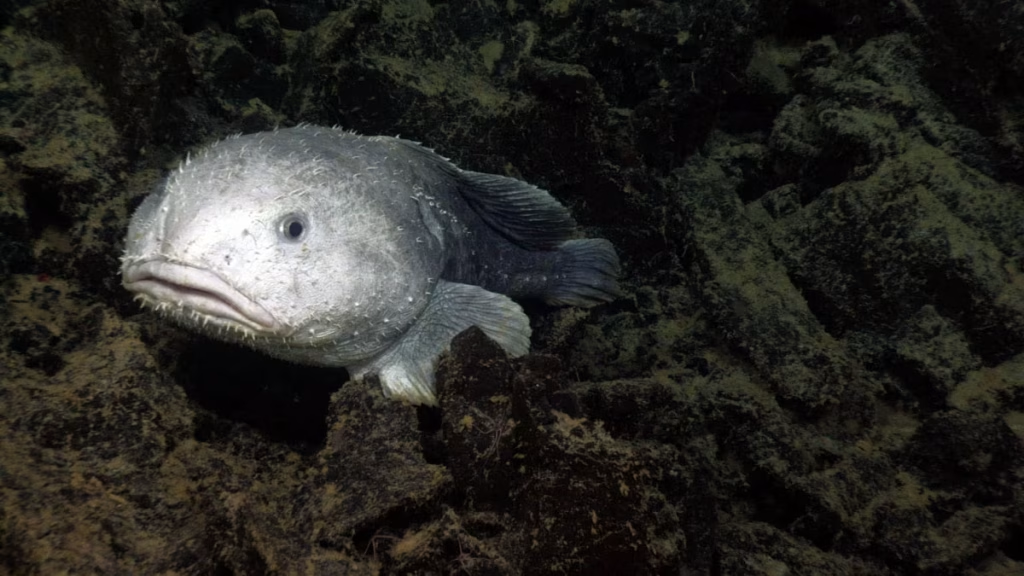
Blobfish – Dubbed “the world’s ugliest fish,” but unfairly! Deep in the ocean’s pressure, it looks perfectly normal — it only turns blobby at the surface when that pressure is gone.
Ghost Octopus (aka Casper) – This pale, pigment-free octopus has never been officially collected, so it doesn’t even have a formal scientific name yet. A true mystery of the deep!
Goblin Shark – A living fossil! Around for 125 million years, this terrifying shark is known for its extendable jaw and long, pointed snout.
Ghost Shark – Not a true shark, but a chimera — a deep-sea relative with glowing eyes to help it navigate the dark depths.
Zombie Worm – Their scientific name means “bone-eater”! These tiny creatures feast on skeletons and recycle nutrients, with microscopic males living inside the females.
Immortal Jellyfish – This jelly can revert to its youth polyp stage and restart its life cycle, essentially living forever (unless eaten, of course!).
Fang tooth Fish – With fangs so huge they fit into special jaw pockets, this nearly invisible fish has ultra-black skin that absorbs almost all light.
Frogfish (shallow water anglerfish)- The ocean’s ultimate ambush predator! Perfectly camouflaged, it uses its special appendage to lure prey close and strikes faster than any other fish in the sea.
The ocean is full of fascinating (and frightening!) creatures — proof that nature does Halloween best! Stay safe and get creative!
What might come as second nature to an experienced Captain could be super interesting to folks just getting into life on the water. It’s important for everyone to know the basics of safe boating.
Our new Boating 101 series, from Gulf Coast Kids, covers some basic tips to know before heading out for a fun boat day.
Watch our first episode: “What to Check Before You Leave the Dock and Navigation 101”, and stay tuned for more boating tips coming soon!
We’re excited to announce the launch of our new program, Gulf Coast Kids! A digital learning platform that provides the access to all of our unique coastal marine resources and maritime industries. Through engaging videos, Gulf Coast Kids aims to educate and inspire the next generation to pursue rewarding coastal careers while strengthening the resilience of our Gulf communities!
Stay tuned for exciting new content from Gulf Coast Kids!
The 2025 Atlantic #HurricaneSeason is here. If you haven’t already done so, now is the time to prepare as the season officially began on June 1. The 2024 season had 18 named storms, with #Hurricane Beryl bringing severe weather to #Galveston. While the peak of hurricane activity for the Galveston area typically falls between August and October, the season runs through November 30. Listen to the @aggiesbythesea experts! 🌊 ⛈️ 🦺 https://news.galveston.tamu.edu/2025-hurricane-season-preparedness/
Dr. Cindy Lee Van Dover is indeed an extraordinary figure in the field of deep-sea biology and oceanography. Her groundbreaking research and achievements have expanded our understanding of one of the most mysterious and least explored ecosystems on Earth—the deep-sea hydrothermal vent communities. She is a true pioneer who has not only contributed to our scientific knowledge but has also made history as a trailblazer for women in ocean exploration and science.
Her journey into the depths of the oceans began with that first expedition to the chemosynthetic ecosystems of the East Pacific Rise in 1982, which sparked her passion for the deep sea. Over her career, she has contributed immensely to the discovery and understanding of benthic invertebrates, some of the most resilient and fascinating creatures on Earth. Her expertise in the biodiversity, biogeography, and connectivity of these organisms has reshaped how we think about life in the deep ocean, especially in the extreme conditions found around hydrothermal vents.
Dr. Van Dover’s work with the submersible ALVIN is particularly remarkable. As the first and only female pilot of this deep-diving vehicle, she has spent a significant portion of her career exploring the ocean floor and studying its unique ecosystems. Her deep familiarity with ALVIN—so much so that she authored the manual for its operation—is a testament to her skill and dedication. The fact that she has conducted 48 dives in ALVIN, many of them to uncharted territories, is an incredible achievement and highlights her courage and expertise.
Her contributions to science aren’t just confined to research; she has also written the first-ever textbook on hydrothermal vent communities, published extensively in prominent scientific journals, and curated the traveling exhibit Beyond the Edge of the Sea, making deep-sea science accessible to the public. Dr. Van Dover’s role in the education and public outreach side of her work has helped bridge the gap between cutting-edge scientific research and broader public awareness, something crucial for fostering a greater understanding and appreciation of the ocean’s mysteries.
At Duke University, her current role as the Harvey Smith Professor of Biological Oceanography and Chair of the Division of Marine Science and Conservation further establishes her as a leader in the academic and scientific community. Her achievements as the first woman to hold the title of Director at the Duke University Marine Laboratory underscore her position as a mentor and role model for aspiring scientists, particularly women, in a field historically dominated by men.
Dr. Cindy Van Dover’s legacy is one of groundbreaking scientific discovery, leadership, and inspiration. She has set the standard for future generations of deep-sea researchers, and her pioneering work continues to inspire those passionate about the ocean and its ecosystems. She is not only advancing the field of biological oceanography but is also showing the world the importance of exploration and conservation of our planet’s most remote environments.
Dr. Sylvia Earle is indeed an extraordinary figure in marine science and ocean conservation. Her lifelong commitment to understanding and protecting the ocean has made her one of the most influential environmentalists of our time. As a pioneering marine biologist and oceanographer, her passion for the ocean and its ecosystems has not only advanced scientific research but has also inspired generations of people to care about the health of our planet.
Dr. Earle graduated high school at 16, college at 19, had a masters degree in botany by the time she was 20, and later went on to receive her PhD in botany as well. She focused a large portion of her studies on different algal species in the Gulf of Mexico and their benefits to the environment. Over her very long and astounding career she has written more than 200 publications, educated in almost 100 countries, and guided hundreds of underwater expeditions totaling over 7,000 hours under the surface. She has even free walked along the sea floor 1,250ft below sea level, a depth that no one else has ever walked at!
Her work with Mission Blue, particularly in establishing Hope Spots, is a testament to her dedication to safeguarding the oceans. These areas, which she has identified as critical for the protection of marine biodiversity, are aimed at creating a global network of protected areas where ecosystems can thrive, ensuring that marine life can continue to survive in a rapidly changing world. Through this initiative, Dr. Earle is working to combat the devastating impacts of climate change, overfishing, and pollution on the world’s oceans.
Her achievements, from becoming the first woman to lead NOAA to her remarkable underwater explorations, showcase not only her intellectual and professional prowess but also her determination and perseverance. Dr. Earle’s legacy is a blueprint for future generations of scientists, conservationists, and everyday people who are inspired by her work to take action in protecting the ocean.
Her nickname, “Her Deepness,” captures the essence of her life’s work—diving into the depths of the ocean, both literally and figuratively, to unlock its secrets, advocate for its preservation, and ultimately, ensure its future.
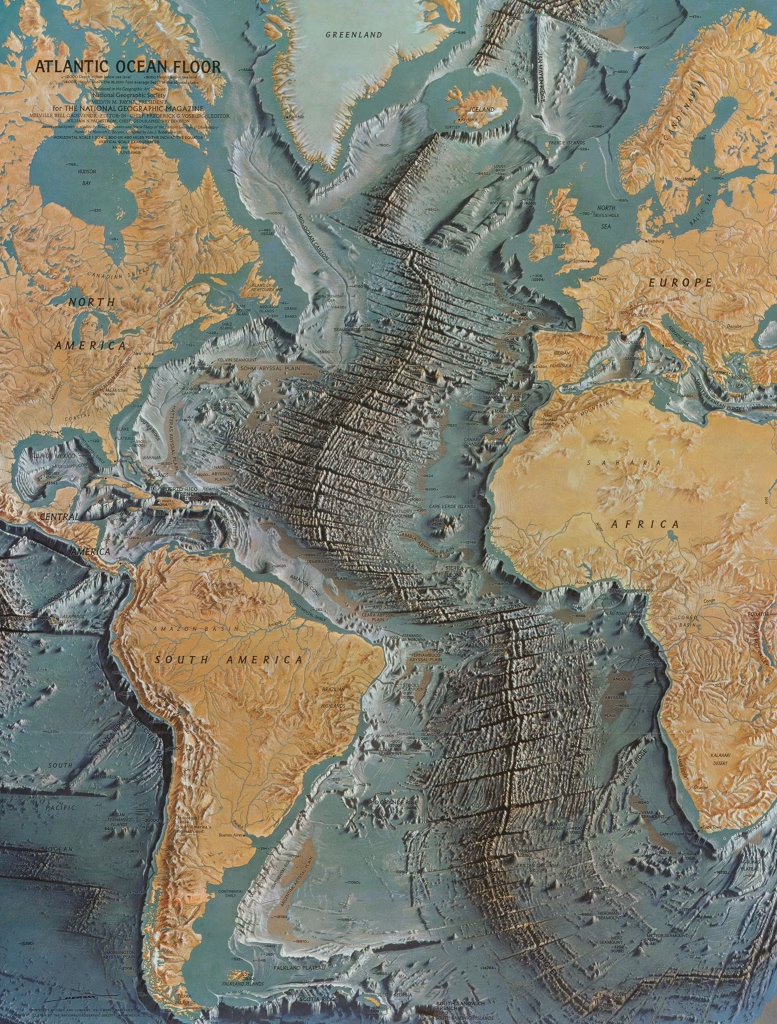
Marie Tharp is such an incredible and often overlooked figure in science! Her story is a testament to perseverance and the importance of fighting for recognition, especially when faced with systemic biases. The fact that she was able to piece together the evidence for the theory of continental drift, despite the widespread dismissal of her ideas as “girl talk”, is nothing short of groundbreaking. She essentially mapped out the very foundation for our understanding of plate tectonics, which now forms the core of modern geology.
It’s mind-blowing how her work with sonar data during World War II led to the discovery of the Mid-Atlantic Ridge, and the way her efforts were overshadowed at first due to gender biases makes her achievements all the more impressive. Jacques Cousteau’s validation of her findings by filming the Mid-Atlantic Ridge with underwater cameras is a powerful reminder of how science sometimes works—slowly but surely, the truth eventually comes to light.
Her perseverance in a field that was not only male-dominated but also dismissive of women at the time shows how resilience can break down barriers. It’s inspiring to think about how her work continues to shape our understanding of the Earth’s geology today.
Do you find Marie Tharp’s story motivating in your own pursuits? Or are there other scientists whose work you find especially inspiring?